

Have you ever walked by a flowering shrub or a tree bursting into autumn and wished you could capture it in knitting? As a rural forest dweller (yep, I literally live in the woods), I have a moment like that every time I step out my door. In this article, I’ll share some of my favorite ways to incorporate inspiration from nature into my knits!
Tip #1: Color Palettes

Nature is chock-full of color palettes that look amazing when translated into yarn and knitwear. Next time you’re outside and see colors that excite you—whether it’s a patch of wildflowers, a sunset, or an unusual butterfly—take a photo. Then pull shades from your photo to guide your choices for your next multi-colored project. Or if you need a color palette and aren’t able to get into the great outdoors yourself, try searching a free stock photo site for nature images as I’ve done below. Most free photo editing softwares have an eyedropper tool that can be used to pull hues from photos. Palettes can also be found on Pinterest, where quite a few creators have done the work for you! Just typing in “nature palette” or “seasonal palette” will bring up dozens of ideas in a snap.
Tip #2: Stitch Patterns and Motifs
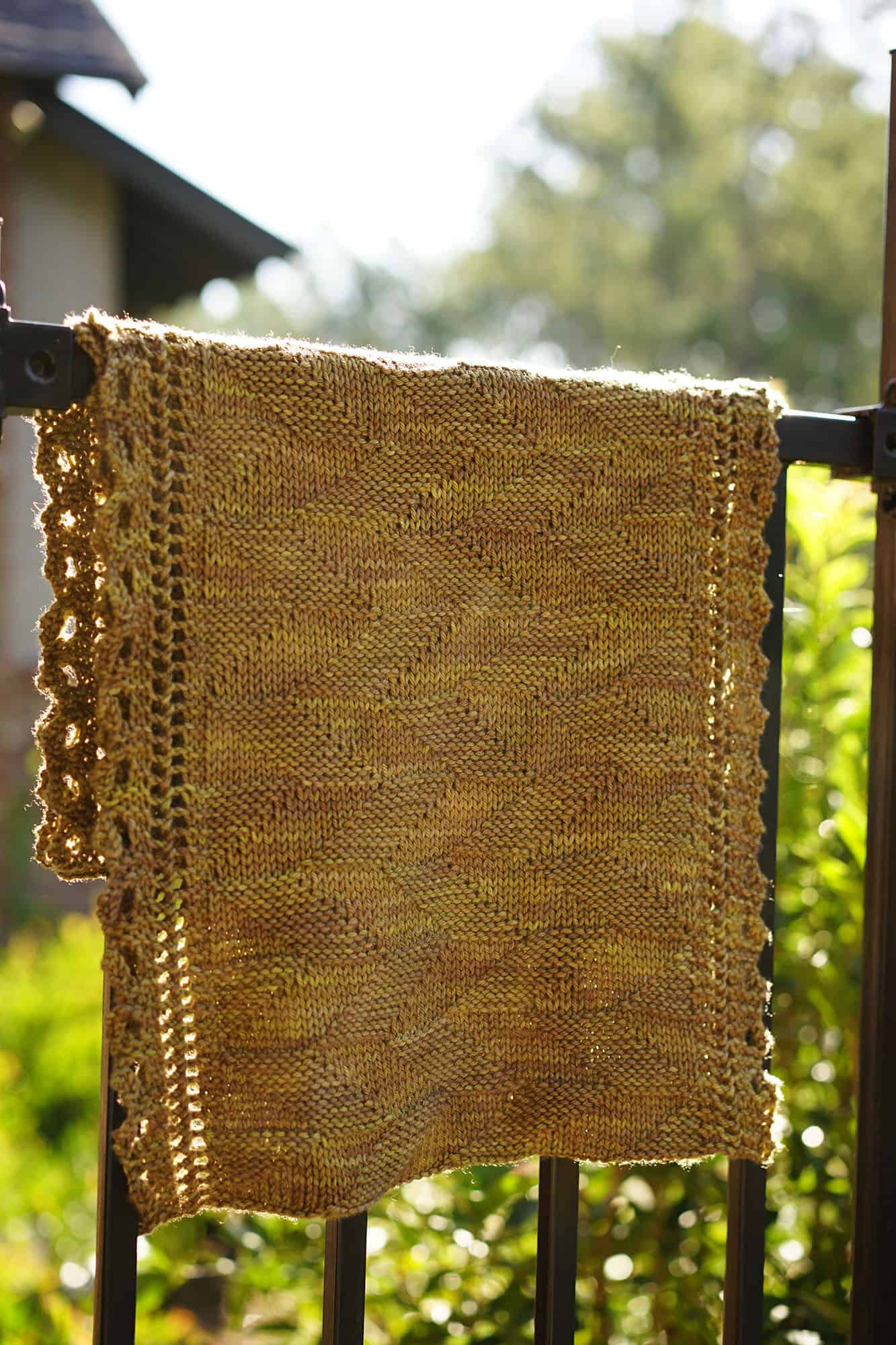
Knitters of the past also drew on nature for project inspiration, resulting in amazing stitch patterns inspired by leaves, branches, animals, and more. That tradition still continues today with designers like Mary P. Hunt, who create stunning original charts depicting creatures from the natural world. While many of these stitch patterns are more advanced, even simple stitches can reflect elements from nature. The textured stitch in my Ivygrown Cowl for Knotions is often referred to as parallelogram stitch, but my mind’s eyes always sees foliage fluttering on a vine.
Tip #3: Yarn Choice
`Even your yarn choice can bring a bit of nature to your knitting. Rustic yarns with tweed, slubs, or other “imperfections” mimic the beautiful irregularities of bark, stone, and beaches. These yarns aren’t always the most gentle on the skin, so if you prefer something softer, try hand-dyed tonals or speckles on superwash yarn. Colors in nature are never “flat”, i.e. without variation, and the fluctuating shades of hand-dyed yarns create a similar effect.`
Tip #4: Don’t Forget Silhouette!
It’s easy to forget, but the silhouette of a knitted garment can also be used to your advantage when creating a nature-inspired look. Man-made lines tend to be clean, precise and graphic with sharp angles. But lines in nature are softer and more graceful. If you’re looking to introduce a bit of subtle woodland adventurer or water fairy into your sweaters and shawls, choose flowing styles with sinuous lines.
Tip #5: Mix and Match!
Any of the tips above can be used in tandem—the sky (pun intended) is your limit! Try a leaflike colorwork stitch pattern in a moody autumn palette, or make a flowy sweater in a rustic yarn.
With that, go forth and incorporate some nature into your knits! Have fun, and always be looking around you for inspiration—because you know that fern your neighbor just planted? It might look amazing in a knit…


About the Author: Ruth Nguyen
Ruth Nguyen is a knit and crochet designer with more ideas than she can possibly make, and a yarn stash small enough that it could always use one more skein.
She regularly collaborates with indie designers and writes for craft publications, and is rarely seen without yarn in hand (if you discover the secret to knitting while sleeping, please pass it along). Her work can be found at redearthdesignstudio.com and on Ravelry as redearthknits.
Leave a Reply