
Spike stitch is a crochet stitch worked into a row below the current one, so a long strand of yarn reaches down across the fabric and pulls color from one stripe into the next.
It looks intricate, but if you can single crochet, you can do it.
This tutorial is part of our Craft Smarter color blending series.

How to Work the Spike Stitch
A spike stitch isn’t a separate stitch. It’s a way of working any stitch: single crochet, half double crochet, double crochet, or taller. The only thing that changes is where you insert your hook.
- Work across your row until you reach the spot for a spike.
- Instead of inserting your hook into the next stitch, insert it into the stitch directly below it, typically 1 to 3 rows down.
- Yarn over and pull up a loop to the height of your current row.
- Finish the stitch as you normally would.
The one thing to get right: that pulled-up loop has to match the height of the other stitches in the row. If it’s too short, the spike compresses the fabric and puckers it. Pull it up loosely every time.
Spike single crochet: Insert your hook into the stitch one or more rows below, yarn over, pull up a long loop to the height of the current row, then yarn over and pull through both loops.
Spike double crochet: Yarn over, insert your hook into the stitch one or more rows below, yarn over, pull up a long loop to the height of the current row, then (yarn over and pull through two loops) twice.
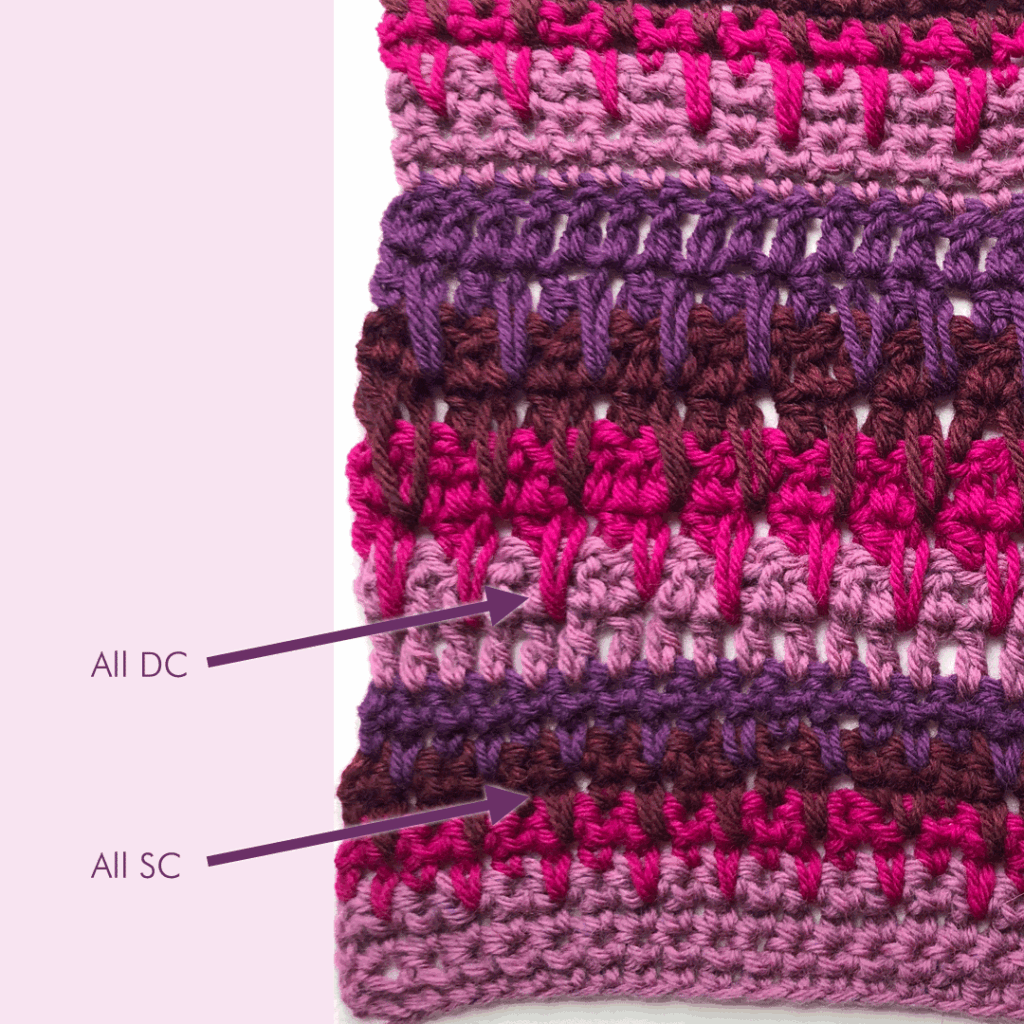
The taller the stitch and the deeper you go, the longer and more dramatic the spike.
Spike Patterns
Changing how far down each spike reaches changes the look of the whole fabric.
Work every spike at the same depth and you get even dashes of color. Step the depth down and back up, say 2, 3, 4, 3, 2 rows, and the spikes form Vs or zigzags.
Spikes use more yarn than regular stitches, and the fabric gets denser where they cluster. Keep that in mind if you’re working them across a whole row.
Using Spike Stitch for Color Blending
Crochet has a built-in advantage for color blending: you can work a stitch into any row below, not just the one on your hook.
That means a new color can reach down into the old one, so the line between them interlocks instead of sitting ruler-straight. The result is a softer, more natural transition.
Knitters can get a similar effect with slipped stitches, which pull a color up instead of down. (See our post on color blending with slipped stitches.)
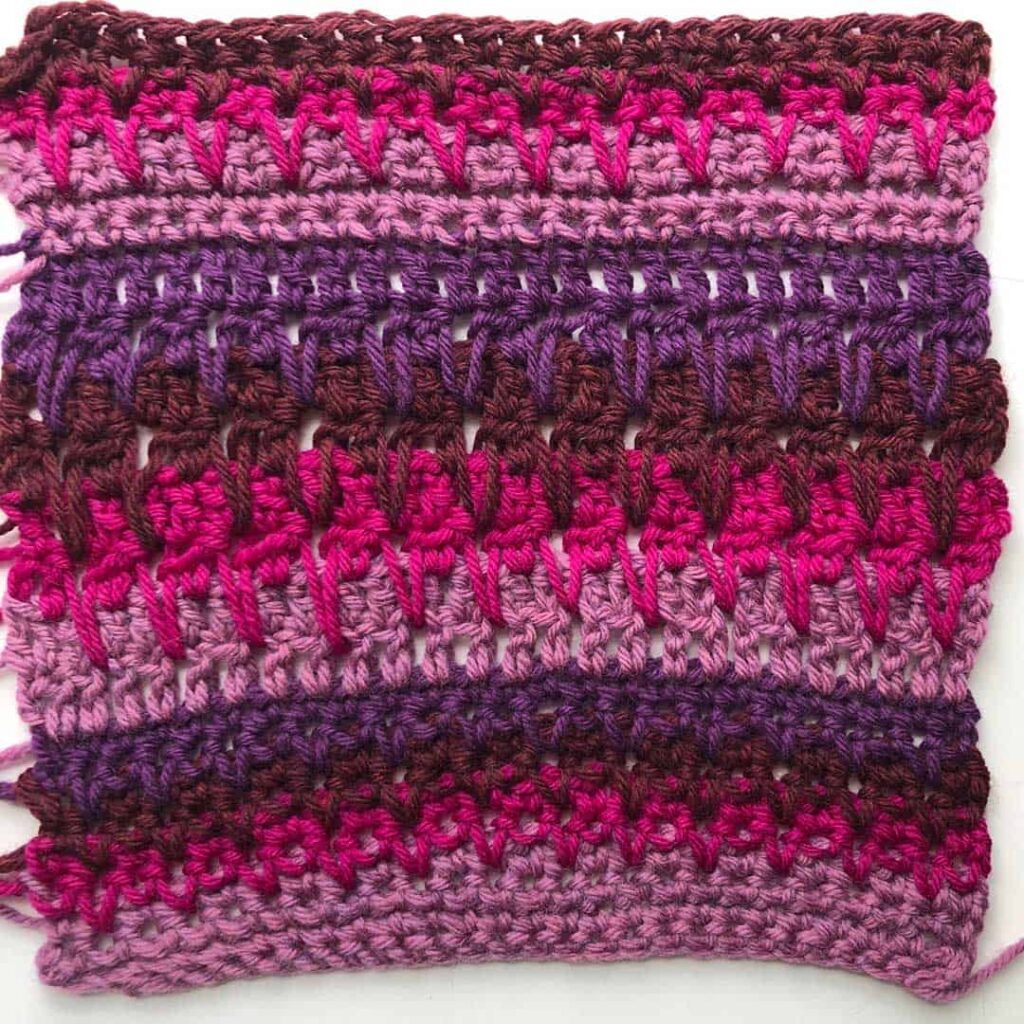
Here’s the wrong side of the same swatch, so you can see how the spikes look from the back.
Try It in a Square
Want to put spike stitch to work? Vivid Core, our March Year of Color crochet square, uses spike stitches that reach down into previous rounds to create vertical color effects.
- Purl Stitch (knitting)
- Linen Stitch (crochet)
- Slipped Stitches (knitting)
- Spike Stitch (crochet)
- Garter Stitch (knitting)
- Shell Stitch (crochet)
- Color Introduction (knitting)
- Lemon Peel Stitch (crochet)
- Holding 2 Colors Together (both knitting and crochet)
We also kicked off this series with a post on color choices and included a bunch of different resources for you to get the juices flowing!
Our Sponsor
And of course, a special thanks to our yarn sponsor, Webs, for donating the yarn for this series. We couldn’t have done it without you – plus their Valley Yarns Line is FABULOUS. I highly recommend them.
Leave a Reply