
How knitting and crochet nurture stillness in the coldest months
What is hygge stitching? Hygge stitching is the practice of knitting or crocheting not as a means to an end, but as a form of presence and rest. It is a way of inhabiting winter rather than enduring it, of letting the craft become a container for stillness rather than a source of stress.
In this article: how knitting and crochet support mindfulness and wellbeing in winter, what hygge really means for makers, how both crafts calm the mind, and how to choose projects that feed the spirit rather than the to-do list.
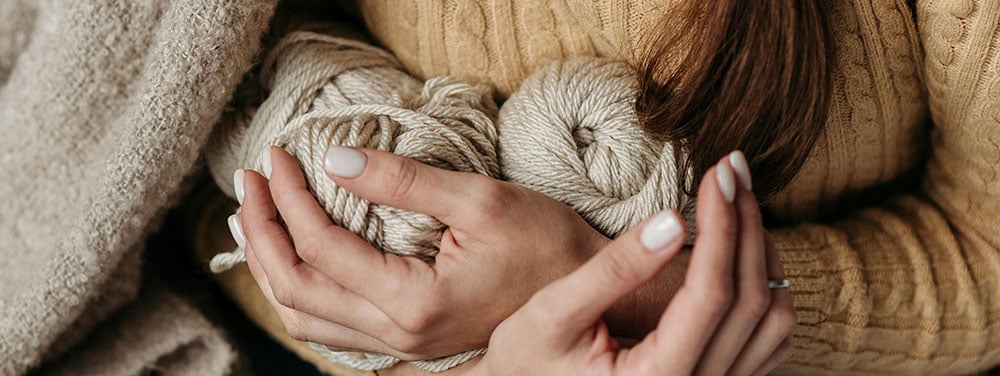
There is a moment, familiar to anyone who has ever picked up needles or a hook, when the world outside the window seems to soften. Snow may be falling or rain streaking the glass; the light is gray and the afternoon short. But inside, there is yarn. There is warmth pooling in the lap. There is the quiet click of needles or the gentle pull of a hook through a loop, and suddenly the season feels less like something to endure and more like an invitation.
Do Knitting and Crochet Have the Same Calming Effect?
Knitters and crocheters often speak of their craft in similar terms, even though the tools and techniques differ. Knitting moves with a bilateral rhythm, two needles working in tandem, stitches held in a careful row. There is something almost metronomic about it, a steady back-and-forth that can feel like breathing made visible.
Crochet, by contrast, lives in the single hook, one active loop at a time. Many find it more spontaneous, more forgiving of the occasional wandering thought. Mistakes are easier to undo; the fabric builds with a certain sculptural freedom. Yet for all these differences, both crafts share a common gift: they quiet the mind.
Is Knitting Good for Anxiety and Mental Health?
Research bears this out. Studies have linked repetitive handcrafts to reduced heart rate, lower cortisol levels, and decreased symptoms of anxiety and depression. The motion becomes a kind of anchor, pulling attention away from spiraling thoughts and into the present moment. Whether one is working a stockinette row or a series of double crochets, the effect is remarkably similar: a settling, a softening, a return to the body and breath.
Why Making Something with Your Hands Feels Different in Winter
Winter asks us to turn inward, and there is perhaps no better companion for that turning than yarn. The literal warmth is undeniable: a blanket square growing heavier in the lap, a sock cuff circling the needles, a cowl beginning to take shape. Wool and alpaca and mohair carry heat in their fibers, and that heat transfers to the maker long before the project is finished.
But there is another warmth here too, one less easily measured. It is the warmth of making something with one’s hands in an age of screens and shortcuts. It is the warmth of slow progress, of watching a skein diminish and a fabric grow, row by row or round by round. In a culture that often treats productivity as the highest virtue, stitching offers something radical: purposeful stillness. The hands are busy, but the spirit rests.
What Does Hygge Actually Mean for Knitters and Crocheters?
The Danish concept of hygge is often translated as “coziness,” but this misses some of its depth. Hygge is not simply about soft blankets and candlelight, though those are welcome. It is about creating conditions for contentment: slowing down, savoring small pleasures, being present with oneself or with loved ones without the pressure to perform or produce.
Knitting and crochet fit this ethos beautifully. They offer a way to sit quietly that still feels like doing something. For those who struggle to simply be, who feel restless without a task, stitching provides an answer: hands engaged, mind at ease, body settled into the chair or the corner of the couch. It is permission to stay put when the world outside is dark and cold.
What Are the Best Knitting and Crochet Projects for a Hygge Practice?
The best projects for hygge stitching are often the simplest. A garter stitch scarf in soft merino. A granny square blanket worked in muted tones. A basic beanie or a pair of fingerless mitts. These are not the patterns that demand constant attention or complex charts; they are the patterns that allow for conversation, for podcasts, for gazing out at the winter sky. The craft becomes a container for rest rather than a source of stress.
How to Choose Yarn and Projects for a Hygge Stitching Practice
Part of the pleasure lies in the ritual of choosing materials. To select yarn for a winter project is its own small ceremony: feeling the softness of a skein, weighing the warmth of different fibers, considering colors that echo the season. Muted sage, dusty blush, warm cream, pale lavender. These are the tones of frost and first light, of wool blankets and milky tea. They speak to something the body understands even before the mind catches up.
And then there is the sensation of working itself. The smooth slide of bamboo needles. The satisfying tug of yarn through a stitch. The weight of a project growing heavier in the hands. These are small pleasures, easy to overlook, but they add up to something significant over the course of a winter evening. They ground the maker in the body, in the room, in the present tense.
Can Hygge Stitching Be a Social Practice?
Though stitching can be a solitary practice, it need not be. Virtual knit-alongs and crochet circles have flourished in recent years, offering connection across distances. There is something tender about making alongside others, even through a screen: hands moving in separate rooms, separate cities, yet joined by a common intention. The craft becomes a thread between people, a quiet form of community.
Some stitch in silence. Others prefer an audiobook or a playlist, letting the story or the music weave into the rhythm of the work. Still others use the time for conversation, the needles or hook providing a comfortable anchor while words flow. There is no single right way; there is only the way that feels most nourishing on any given evening.
An Invitation to Stitch More Slowly
Winter will come regardless. The days will shorten, the light will thin, the cold will press against the windows. But within that season, there is space for something gentle. A skein of yarn. A simple pattern. A few quiet hours with nothing demanded but the next stitch.
Hygge stitching is not about finishing. It is not about the perfect project or the most impressive technique. It is about the act itself: the way the hands find their rhythm, the way the breath deepens, the way the world outside grows softer when there is warmth inside. For knitters and crocheters alike, this is the gift the craft offers when we let it. Not just something made, but something felt. Not just a finished object, but a practice of presence. Not just winter survived, but winter savored.
Frequently Asked Questions
Yes. Research links repetitive handcrafts like knitting and crochet to reduced cortisol levels, lower heart rate, and decreased symptoms of anxiety and depression. The rhythmic motion acts as an anchor, drawing attention back to the present moment.
Simple, low-pressure projects work best: a garter stitch scarf in soft merino, a granny square blanket in muted tones, a basic hat or fingerless mitts. The goal is a calm, meditative rhythm rather than a technical challenge.
Absolutely. The single-hook rhythm of crochet is just as meditative as knitting, and many crafters find it more forgiving and spontaneous. Both crafts support the stillness and presence at the heart of a hygge practice.
Soft, natural fibers in muted, seasonal tones tend to suit a hygge practice best. Think merino wool, alpaca, mohair, or cashmere blends in colors like dusty blush, pale sage, warm cream, and soft lavender. The sensory experience of the yarn matters as much as the finished object.
About the Author: Jody Richards

Jody is the founder and lead editor of Knotions. She loves poring over stitch dictionaries and trying out new stitches.
She’s also on a mission to get everyone to embrace the blocking. And, to avoid using garter stitch edges in swatches.
And while she likes all things crafting (well ok, except that one thing), yarn crafts are her true love (and she has the stash to prove it).

Leave a Reply